Make sure the puppies get warm and dry
as soon as possible after they are born.
ALWAYS have Clavamox and Oxytocin on hand for the mom
as never fails you will need this in the middle of the night
when the vet office is closed.
When they are still wet their temperature can drop rapidly.
The pups must be kept in an environment of 70 F or 21 C with a heating pad
on medium in center of the whelping box.
With this set up, pups are warm and cozy and mom is not overheated and will be comfortable.
Rule of thumb is if you see pups all spread out = whelping box is too warm,
pups all piled up and crying = whelping box too cold
If pups are lined up and quiet = whelping box temperature is just perfect.
We use a 24" heating pad (that does NOT automatically shut off)
covered in a towel in a bin and put all newborn pups in a bin,
to warm and dry, if mom is not upset.
Never allow a chilled puppy to feed until they are fully warmed up,
as their systems will shut down if the pups are chilled.
When the bitch has finished giving birth, return the puppies to her
(after cleaning up the whelping box area).
Try to take mom outside to exercise and stimulate whelping and to pee
as often as you can (usually between pups being born).
It's very important that the puppies receive the bitch's first milk.
However if necessary
pups can survive up to 4 hours without nursing.
This first milk, colostrum, contains antibodies to all the diseases
the bitch has encountered during her life time through heard immunity
(naturally aquired) and or through Vaccinations she has received.
This exposure will help to protect the puppies against diseases.
The ability of the puppy to adapt colostrum will cease after 24-48 hours.
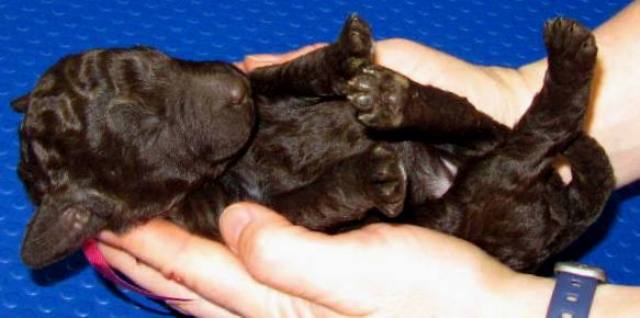
Determine the sex of the puppies.
Male puppies have a 'button' just below their umbilical cord stump,
female puppies have a 'button' much further down and between their hind legs.
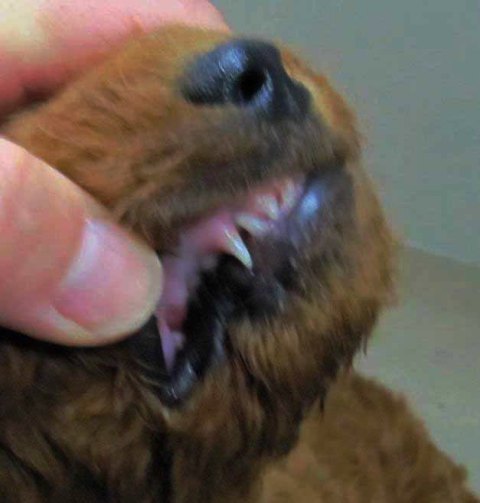
Check the puppies for any defects. Look in their mouths
to check the roof of their mouth for any abnormality.
Puppy’s with any defects will be euthanized by a caring Breeder
and NOT sustained and put through efforts causing torture.
A Caring breeder will wish to ensure all pups are HEALTHY and not
do heroic measures to sustain a defective puppy to have a short life span in a pet home.
Bijou Poodles removes dewclaws and docks tails shortly after pups are born.
In poodles especially, if dewclaws are not removed,
hair will grow over the dewclaws and will get missed in getting
trimmed for months, until they grown into Puppy’s legs
and puppy is in agony before owners remember to trim them, so are best to be removed.
Front declaws often get pulled or caught and ripped off. WE avoid this tragedy on Day 1 by
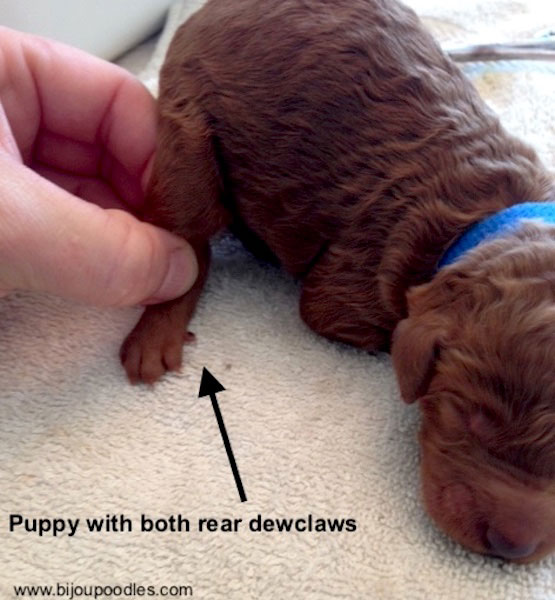
Removing puppy's dewclaws simply while mom is there. ALWAYS check puppy for REAR dewclaws.
I have seen Rear Dewclaws 4x in over 30 years of breeding. RARE
I have seen DOUBLE REAR dewclaws on a Portugees Water Dog ! so Check !
At this time I also dock my poodle pup tails, what ever length I deem appropriate.
Some breeders weigh the puppies every day - or at least during the first two weeks.
A healthy pup will increase its body weight by 5-10% per day.
Bijou Poodles have never done this practice, as we can easily tell by looking
who needs extra help to get on a nipple to nurse.
We do NOT believe in heroic measures to save an unhealthy puppy.
We only want the strongest, healthiest pups to go to loving pet homes.
Failure to gain weight, may be the first sign of disease or fading puppy syndrome.
They should have doubled their weight at the end of the first week.
Bijou Poodle puppies will gain one pound per week, on average.
By 8 weeks of age pups should weigh 6-8 lbs on average.
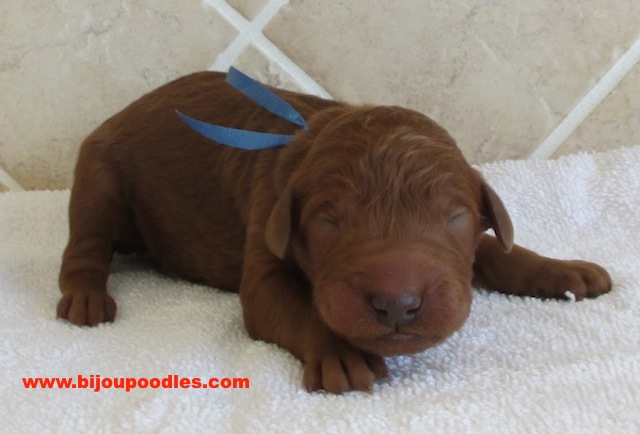
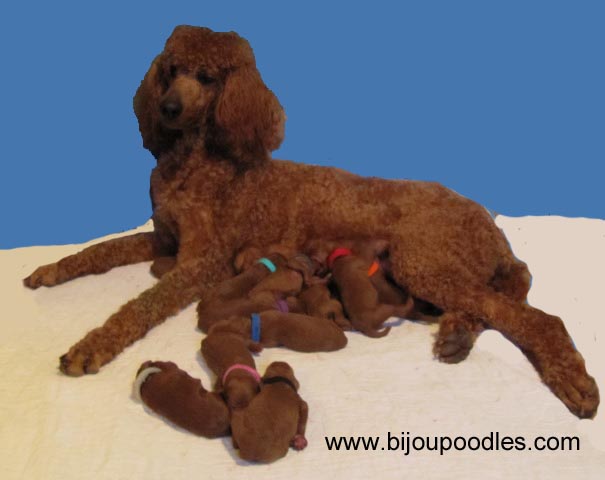
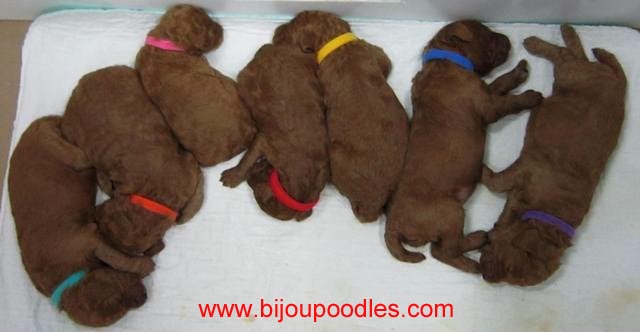
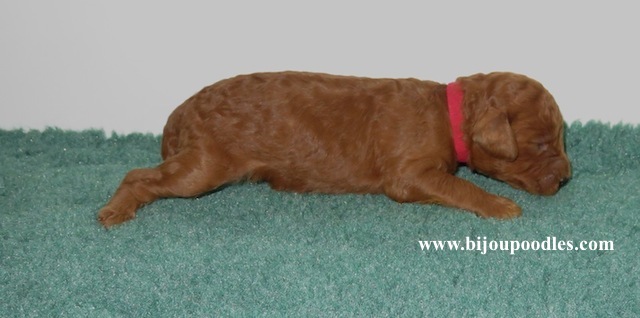
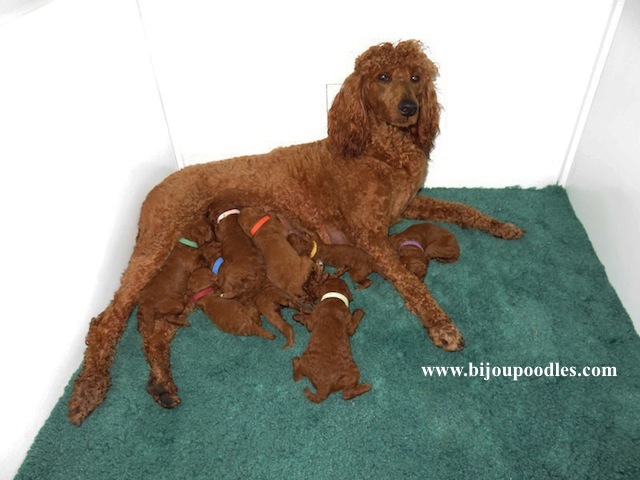
During the first week we also apply specially made Newborn Puppy Collars
to help us keep track of individual pups.
First Week -
The first 36 hours of your puppy's life are the most critical for its survival.
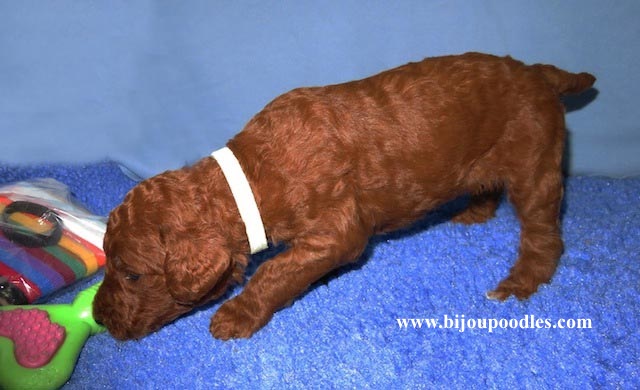
We identify each puppy by Velcro collars which we make and sell.
This helps us keep track of who is who.
Puppies are born in a very immature state.
They can not regulate their own body temperature.
They can only keep up their body heat by lying against something warm,
either the bitch or on a heat pad.
Newborn puppies are never still, they twitch and jerk and stretch.
This reflex action is called activated sleep.
A pup which lies completely still is likely to be in trouble
and is usually the pup that is constantly crying.
The umbilicus should be carefully inspected
for evidence of inflammation or infection which is RARE.
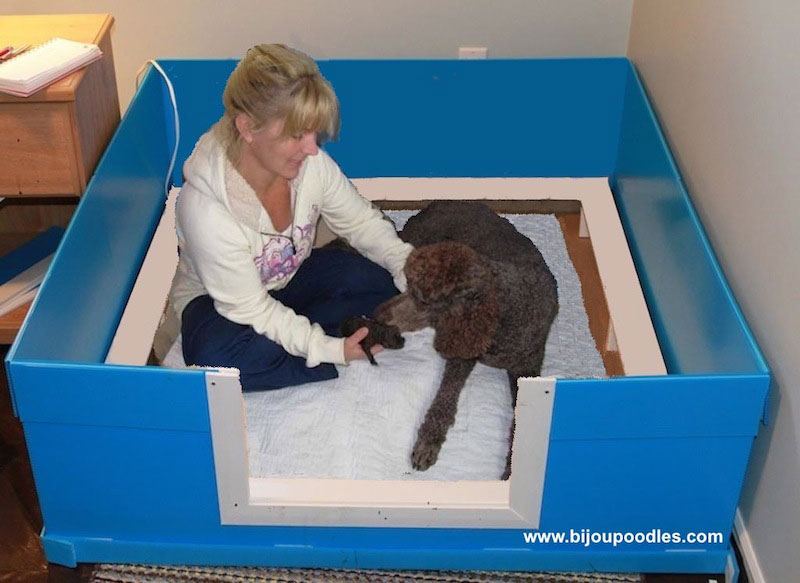
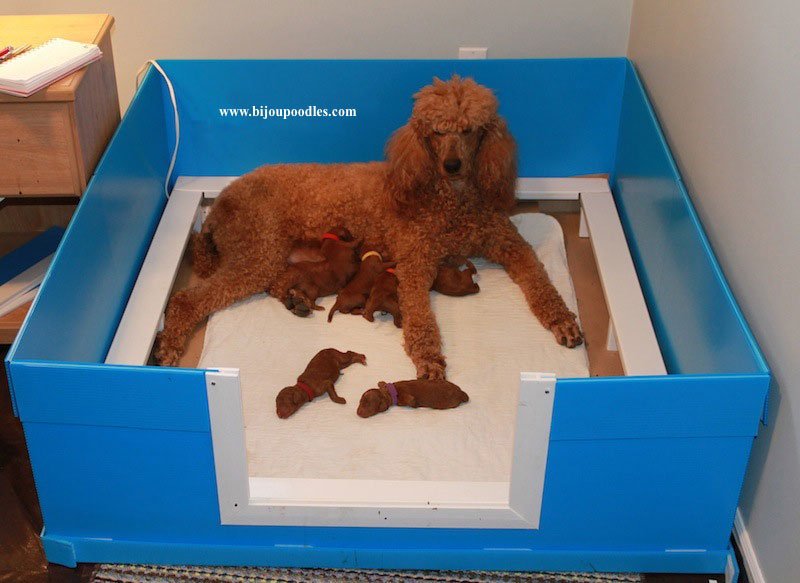
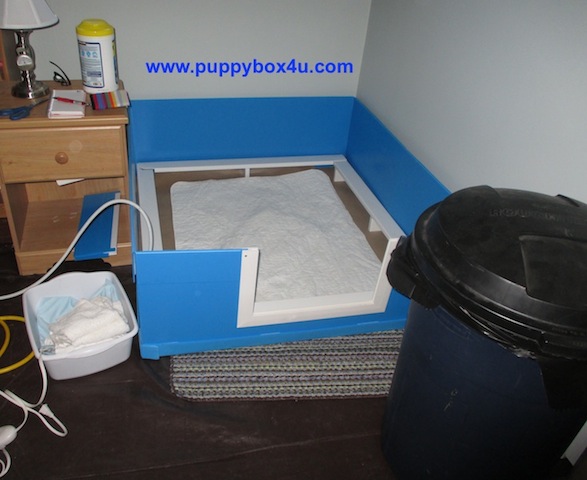
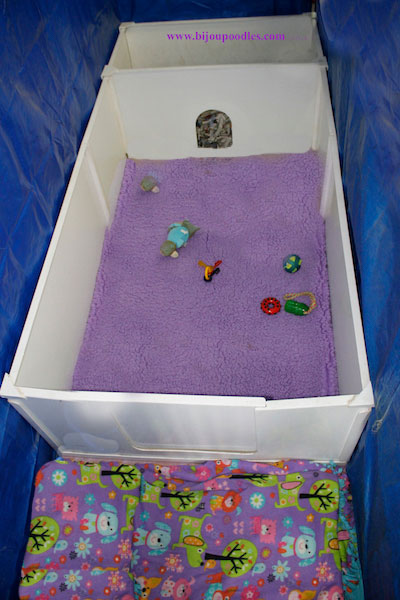
We designed and built an ideal whelping box
to provide mother with a safe environment
to whelp and raise her pups in, because there was nothing on the market that could do this.
When thinking about a whelping box for medium to large breeds,
you want at least 16" high sides, ours have 20"-24” high sides to keep pups contained
And to keep breezes (yes even in the house) out of the box,
and mess from mom's tail and during whelping kept contained inside
You will also need a base for your whelping or puppy box, again to keep mess contained
but also easy to sanitize and to keep your box from moving around.
You will also want your whelping box in a square shape,
to fit beside your bed or in a corner. We find 4'x4' size ideal for all med to large breeds.
Our Box also gives mom enough room to be comfortable any way she
wishes to lay down to nurse their pups.
Because we have big litters our mothers will often rotate their pups
feeding half at a time while the other half naps.
Our Box is made of plastic material that is easy to sanitize
and will not hold bacteria, or smell, unlike the wood ones you see people using.
Baby swimming pools can work fine, but harbor bacteria
as are difficult to clean every nook on them
and are very easy to store between use, even the puppy rails for puppy safety.
My research and cost was a lot, but I know the payoff
is that I have clean, healthy, happy moms and pups.
Bijou Poodle pups have their own puppy nursery, in a bedroom right next to ours,
set up for comfort and ease of care.
Try not to disturb the bitch and her puppies too much, but do check
every two hours or so, to see if everything is OK
This is when nanny cams come in very handy or Nest online
cameras especially if it's the bitch's first litter.
Nervous owners = Nervous moms, try not to interfere too much and give mom
Her privacy so that she can focus on caring for her pups.
Do not keep mom and pups in a busy communal area, as that is very stressful
for the mother, even if she appears OK or happy to see you,
her body and mind will be stressed as it is her instinct
to protect her pups from harm and intruders. While she knows you,
she can't control that "knee jerk" rush
that adds stress into her system and onto the pups.
Always have a quiet, private area to house mother and pups while she is still nursing her pups.
If the mom appears stressed or unable to settle and look comfortable,
she may need to see the Vet.
This is usually a sign she may have a puppy still inside of her.
We have had our mom's pop out a live big puppy 24 hours
after appearing to be done whelping and live a healthy life.
However in one other case 12 hours later and no puppy and knowing
and feeling some still inside, I have had to do an emergency C-Section.
Make sure the Vet administers anesthetic and then GETS CUTTING the bitch open
otherwise you will loose the retained pups because of anesthetic is getting to them !
Vets will NOT tell you this.
WE have worked 15 minutes on pups and brought them around.
No puppy is "dead" until it is WARM and "dead". Try to get Vets going quicker !
Make sure the bitch is eating and drinking well.
Dedicated new mothers may neglect their own needs.
Try and feed the bitch in the whelping box with her puppies,
as long as she is not food aggressive, you may even need to coax her a bit.
Ensure the bitch has a high protein diet and that the quantity is increased accordingly.
Feeding and looking after puppies is hard work
and the bitch will need an increased ration of RAW diet.
Some believe you also should feed calcium to mother.
We have not done this, but it would not hurt to have cottage cheese
or yogurt on hand during whelping, to offer mom.
The ration size will need to increase as the puppies get older
and their milk consumption increases.
Give the bitch ample opportunities to go outside to relieve herself
she may be reluctant to leave her babies so coax her with a baby
but make her go outside, between puppy delivery.
The first week we begin to perform Bi Sensor Stimulation our pups to ensure they receive the
proper amount of stimulus and positive outcomes resulting in calm, confident, well rounded puppies
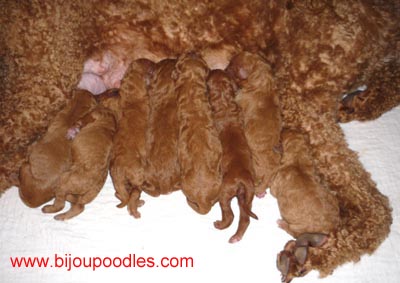
Puppies have instinctive reflexes: crawl, seek warmth, & they nurse.
New-born puppies are unable to urinate or defecate by themselves.
The bitch will stimulate them to do so by licking their rear end and tummies.
Some bitches are not as contentious as others, it is a good idea
to check that she is performing this task adequately.
Without this stimulation a puppy will die. You can mimic this action
by dampening a cotton wool ball with some warm water
and rubbing the puppy's urinary opening ('button') with a gentle back and forth motion.
To encourage them to defecate, rub in a circular motion under their tails.
Some puppies loose a bit of weight during their first day,
and possibly don't gain weight on their second day
but will catch up during their third day and fill out rapidly after that.
In so long as the puppies appear well in all other respects, don't worry.
If however you feel there is cause for concern,
you could 'top' the babies up with a bottle (or sponge feeding) I never do this.
for a couple of days (this is in addition to them feeding from the bitch).
A healthy new-born puppy is either sleeping or sucking.
He should feel plump, warm, round and firm and will make low 'contented' murmuring noises.
If a puppy appears to be apathetic or cries constantly,
something is wrong. You can consult your vet
but usually you will waste money as this puppy will not survive.
Usually these pups make a "gold fish" gulping air movements.
You may find a puppy squished by the mother. Do not scold her,
because generally she has done so, because she can sense there is something wrong with that puppy.
Abnormal pups are limp to pick up, boney, have a damp, wrinkled, cold skin, purplish tummies and feet
and may utter a persistent, plaintive (seagull-type) cry, or may be silent and chilled.
Most females will be fine, but If the bitch can't handle the feeding of her puppies,
you might want to take care of two or three feedings each day.
It is always wise to have 2 moms at the same time, whelping,
so that one female may help the other by taking more pups to raise.
You can supplement puppy feeding with goats milk,
or a commercial substitute like esbilac puppy milk replacer from the Pet store.
Use the "sponge" method, so you can't over feed the puppy and pups learn to suckle.
Don't forget burp the puppy and give to the bitch to be cleaned
or you stimulate the gentiles to void and defecate
with a damp cotton ball as newborns can't poo or pee on their own and will die
if not stimulated to pee and poop.
We have never ever substituted feeding a puppy, but many breeders
like to be more involved and will do this extra work.
Pups day 5-7
Umbilical cord drops off. By the end of the first week the puppies
will be more mobile and will crawl around on their bellies
and have a good sense of direction when moving towards the mother dog.
The mother will leave the puppies briefly several times a day
and the puppies will be OK with this. Handle the puppies daily
for short periods, never completely removing them from the puppy area.
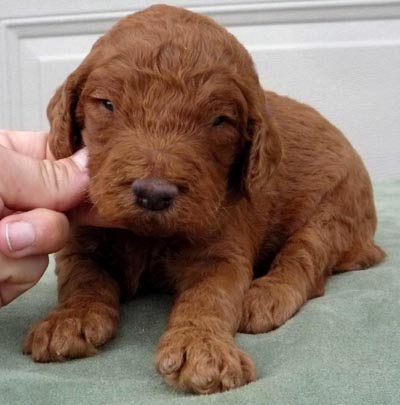
The puppies eyes will start to open. Their sight is still very blurred
and they won't be able to see clearly for some time to come.
Make sure the eyes are clean, look for any signs of pus.
Exposure to breeze or any chill will cause the puppy to get the snots and possibly
Eye discharge.
Trim the puppies nails with some small blunt scissors.
Puppy's nails can be very sharp and will scratch the Mom's Nipples.
Trim their nails every week.
By the end of the second week the puppies should be walking
with a fair amount of stability.
The sharp puppy claws may need to be blunted to avoid injure to the littermates.
The puppy’s eyes will start to open slightly and they will
begin to have sense of smell towards the end of the second week.
They are starting to notice noises and when people arrive.
Handle the puppies daily and for longer periods.
Pups are sure getting larger and larger now.
In 2015 we have now started to use "Vet Fleece" for our pups and while extremely expensive
and time consuming to wash at the coin laundry, sure keeps our pups
safe, warm, comfortable, clean and happy.
You will never wish to raise another litter without Vet Fleece (from PRO FLEECE) once you use it !!
Pups day 14
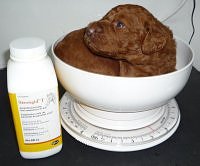
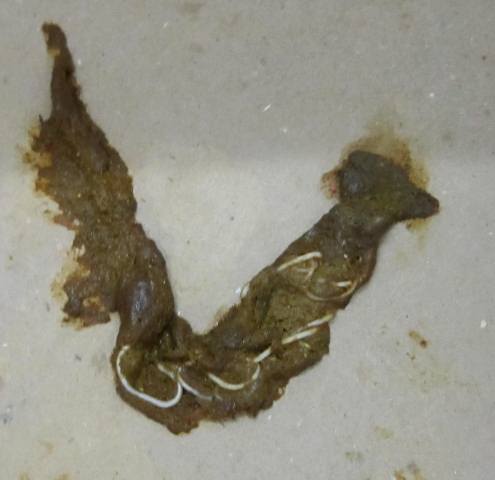
*Pictures of Puppy being dewormed
(All puppies may have round worms)
Worm the puppies! At this stage it is also appropriate to worm
the mom with Strongid T.
We do day 14 day 15 and repeat day 25 and 26 mom and pups.
Watch pups for signs of Entropion.
Eye lid will turn into the eye causing irritation and this
will need to be repaired by an experienced Veterinarian at 7 weeks of age
(or older for the less experienced vet)
At this time if pups are kept where there is a door opening or closing and a draft,
they can get snotty noses appearing to have a cold.
This will be deadly if not treated with liquid Clavamox right away !!!
.........
.
At 2 weeks of age once eyes open, I remove the heating pad
because they can generate their own body heat/temperature and can keep warm.
Pups that are spread out = too warm
Pups piled top of each other = too cold
Pups laying together lined up spaced = “just right”
that is how you know your temperature is good, their whelping box.
The ear canals begin to open.
Pups are moved from the smaller
whelping box into their
Puppy Box.
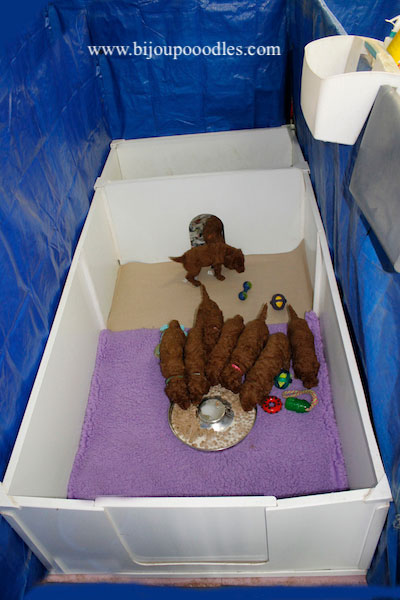
Bijou pups are also moved to our PUPPY BOX so that they can begin
to learn and develop into clean puppies.
Toilet training starts using the "Bijou Method".
As soon as we introduce the pups into the "Puppy Box".
At this time the pups are moving around more
and will want to naturally eliminate further and further
from where they eat and sleep. The "Bijou Method" taps
into this natural instinct by providing the room and area
for the pups to accomplish this natural instinct, reliably.
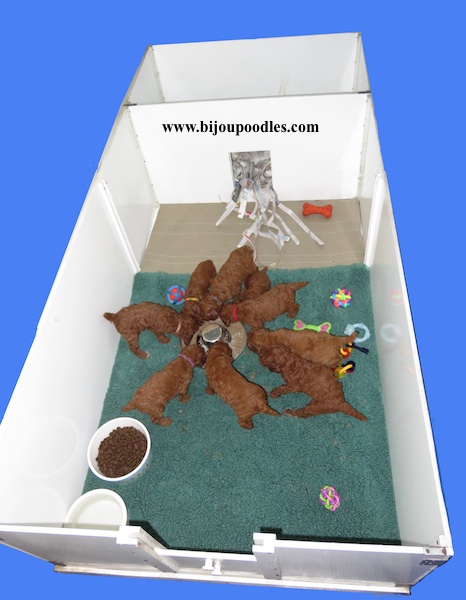
The "Bijou Method" is accomplished putting the food and water
and play area, at one end of the "Puppy Box"
and putting papers down the other far end near by the potty area
Pups go further from sleeping area and closer to Potty area,
eventually using only the Potty area to soil in.
By 4-5 weeks of age, the pups will only use the "Potty" area to toilet in.
We keep our puppy box clean, this week only needing to change the potty area daily.
Their sleeping/eating/play area is kept clean.
Our diligence pays off, when our puppy people tell us
that their pups are toilet trained within a few days of coming home.
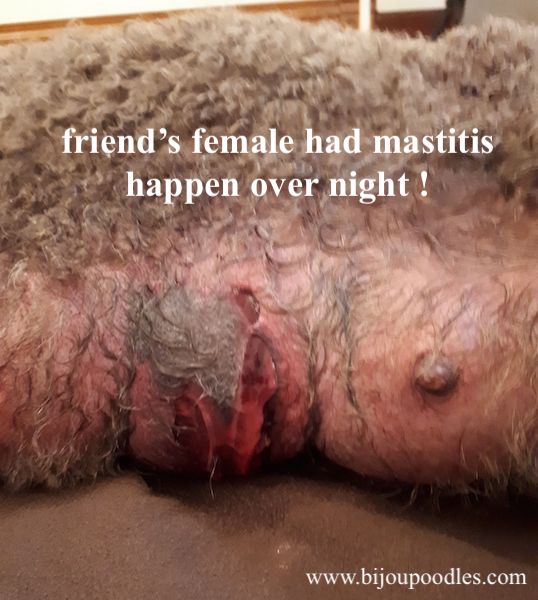
RARE but do keep a feel of mom's nipples to make sure none are hard
During weaning. If hard and hot, this could be the beginnings of mastitis.
this can happen during the weaning process as pups are not nursing as much
but milk production doesn't lesson.
I always have Clavaseptin and or Clavamox pills on hand
because as soon as a nipple feels harden, I will pill the mom to avoid Mastitis.
Never squeeze or milk that nipple, as that will only encourage
milk to come in, and create more problems such as in the photo above.
Pups day 14 days
The puppies will tolerate changes in temperature better now.
However they still need to be kept at an even temperature and away from drafts.
Pups are beginning to move away from where they sleep to poo and pee.
This is the first step in our process to develop clean pups that start to toilet train.
We researched and designed and had fabricated up our new and improved Puppy/Whelping Box
at HUGE expense, specifically designed, to help pups toilet train and learn to be clean puppies.
Pups day 24 & day 25
*Pictures of Puppy being dewormed
....
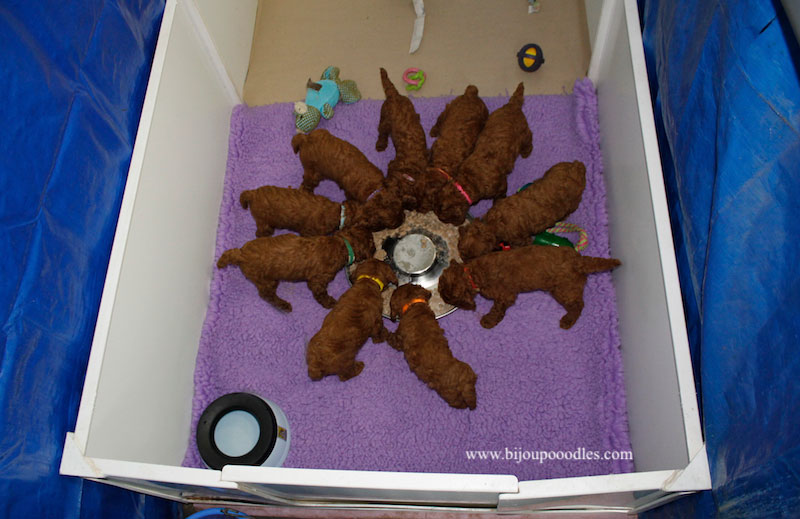
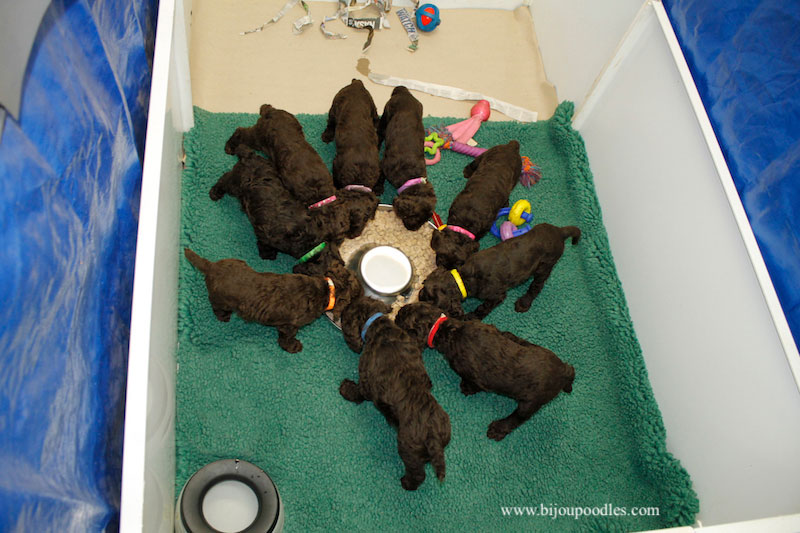
Bijou Poodles feeds our mom and pups RAW. Our mom wishes to no longer nurse
at this age, so she rejoins our family and pups wean right onto RAW mixed with
RAW unpasteurized Goats milk 3.8% we get directly from a goat farmer. Puppy Raw weaning Step 1
When pups start to have teeth cut through, that is when mom’s no longer wish to nurse.
Our pups have limited sight, but good sense of hearing and smell.
They are constantly on the move in the litter area and begin to play and socialize with each other.
Now is the time to worm the puppies.
We use "STRONGID T" Puppies should be wormed at 14 days old 15 days old, 25 days old and 26 days of age.
Make sure to worm mom at the same time !!! 1cc per 10 lbs. For pups I use a 1cc syringe (without needle)
Some vets will want to use Safeguard but you can't use that on pups under 6 weeks of age !!!
Consult your vet when in doubt, or your mentor.
Pups day 20 to day 30
....
IF you find your pups have bad Diarrhea (know the difference between gummy normal puppy poops)
then you might be experiencing a bout of Coccidia.
DON'T PANIC there is a cure and it is called Baycox 5%
or its generic name Toltrazuril 5% Oral Suspension.
As of 2018 you can only purchase online from the USA or Australia
You will see results immediately. Giardia is also a common issue breeder's deal with
and the cure for that is Safeguard or Panacur (Fenbendazole)
READ labels before you use or consult your Vet.
Puppy teeth are in and after a week of adding goat milk (Step 2 Weaning)will be 100% onto just the RAW food.
Puppies will start learning socialization and appropriate chewing
and biting from both their littermates. Before this time,
Mom will really discipline them when they bite her, by growling, holding them down
with her paws and for the most stubborn pups she will do
a combination of growl, hold and take in her mouth
to show that she is really serious. All this happens lightening speed and sounds fierce.
People should really take note of this, as when you get
puppy home and puppy nips at you, this is unacceptable behaviour
and you need to correct this, forcefully and quickly like
what their mom did if you wish for this behaviour to stop.
Also taking the time to show puppy what is desired behavior so they know what to do to please you.
RAW goat's milk (not pasteurized), you will find in the health food section of stores.
I pour this RAW and goats milk into my metal "flying saucer"
puppy dish and pour even more warm goats milk over top.
Put the food directly into the puppies mouth and let him/her suck it.
Puppies soon get the 'taste' for RAW and wean fast onto it.
I feed my pups that are completely weaned 3x per day starting
week 3.5-4 weeks of age, depending on how the pups are doing.
I basically feed my pups 4 lbs for 10 puppy litter.
Feeding them as much as they will eat
Until they walk away full. Until the next feeding.
I also leave water out in a "no tip" travel type dish so they don't play in it or tip it over.
The puppies will now begin to bark, wag their tails, bit, paw and growl !
The puppies should now be up on their feet (they are quite wobbly!)
and will start to explore their surroundings a bit.
They can now urinate and defecate without the help of the bitch.
The puppies need to be handled frequently after 3 weeks of age and be
introduced to various sights and sounds (within the household!).
I do not allow any visitors until puppy pick up day. However if you do,
ensure that visitors do not expose the puppies to germs.
Our pups are now 100% only using the potty area (lined with newspaper) to pee and poo in
Their play/eat/sleep area is kept spotless
Our pups are now eating 4x a day.
Once pups starts eating solid food, the mother no longer cleans it up
Now it is up to the BREEDER to keep the box/nest very clean.
When this is done right, by the time the buyer purchases the pup,
puppy will already be trained to only pee and poop on newspapers
and or hold it until they can get outside
as they do not pee or poop where they eat or where they sleep.
So believe it or not, what goes on from the time of birth
to the time you buy the pup plays a big role, on the young life
and what a buyer will be faced with.
Pups day 28
Ear canals should have completely opened by now.
The puppies should be exposed to a variety of noises now.
We take "desensitizing" very seriously
and we have a program in place, to rotate a variety of startling noises
and vibrations, creating normally negative stimulus,
following up with a pleasant experience such as play, cuddling or feeding times.
Our program, combined with the bio-Sensor program has proven very successful in developing
confident, well adjusted puppies. Now the pups are able to toddle
about and play and learn also how much pressure they can bite each other with.
They will test limits with each other. They will also be subjected to household
comings and goings, which will be good for them during their socialization phase.
All our Champions and pups have been raised on: RAW
In 2017 we decided to put our Poodles and their puppies on RAW food.
We could not ignore that more dogs of all breeds, have been having reactions and issues on kibble.
2017 we felt it was time to spend the money, and the time, to put our Poodles on RAW.
Since starting on RAW our pups have not had loose stools, healthy GI's
and their bladders have been healthier as well and tartar free teeth.
We can't deny all the amazing results of being on RAW.
You may wish to check our FOOD Link for more options and any updates.
Pups day 30 to day 40
*Pictures of Puppy being dewormed
Worm the puppies again!. At this stage it is also appropriate to worm the bitch with a suitable product.
Once the puppies are on solid food the Mom will no longer clean them.
Usually the puppies will move into our poo/pee area of their box to urinate and defecate at 5 weeks of age.
We have a separate section in the whelping box that the puppies eventually climb into and use to toilet in.
This is the second step in toilet training our puppies.
Pups are noisy (loud piercing barking),
messy (because mom doesn't clean them), needing constant human touch and play (for socialization),
need to be cleaned with fresh papers and area washed every 2-3 hours (to help them develop into clean pups).
They are also the cutest looking like little teddy bears.
Pups day 35
...
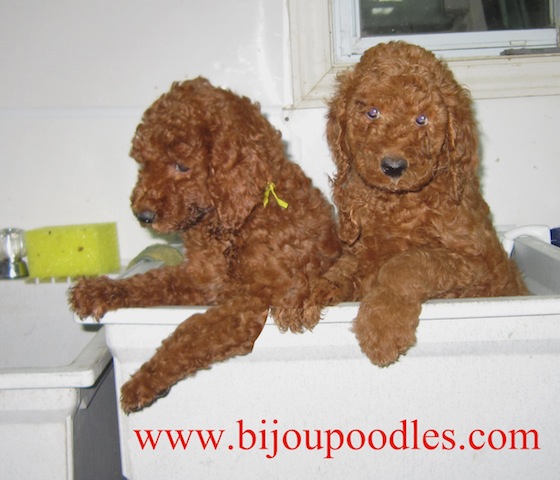
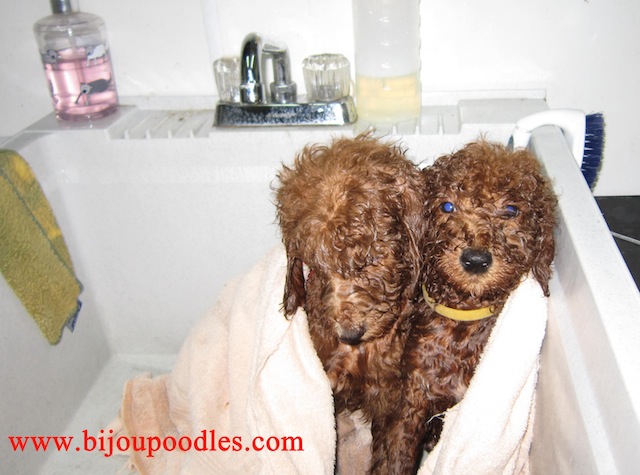
Pups receive their first bath and blow dry. *Click here to read more about grooming
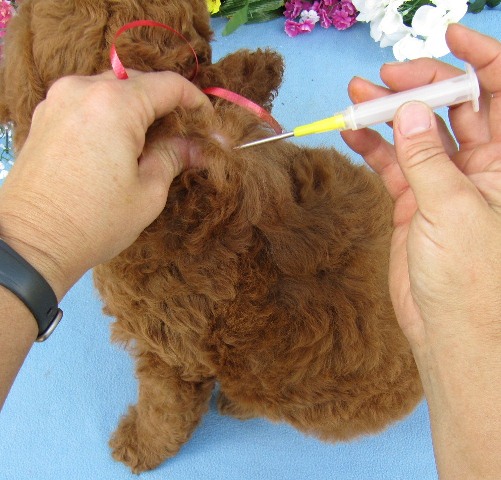
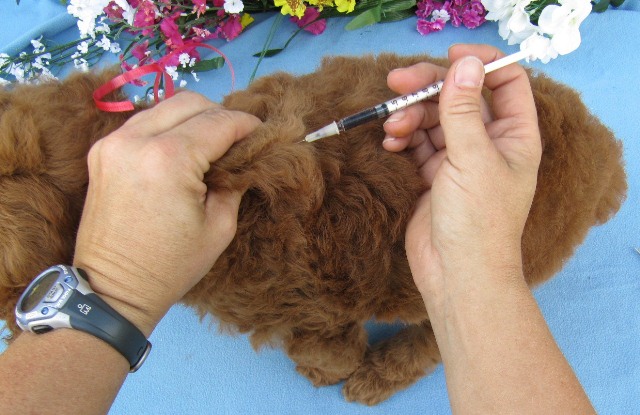
It is time to Implant the Puppies with their permanent Identification.
A Microchip the size of a grain of rice is implanted between the pup's shoulder blades, just as a vaccination is done.
This "microchip" when scanned will produce a number unique to that puppy.
There is no way to alter the number or remove the chip without doing surgery.
This chip number can be read by any shelter's scanner
and will assist you in identifying your puppy.
Pups eating solid RAW food
The puppies should be completely weaned now.
They should receive all their nourishment from food rather than from their mother.
However it is permissible to allow the bitch to give
the puppies the occasional feed should she so desire.
Don't leave the softened food down permanently, this is unhygienic.
Make sure you offer the puppies water to drink.
As they move over to solid food and rely less on the bitch
they will need water to replace the fluid they had in the form of milk.
Ensure the water container is not deep or a puppy could fall in and drown
The mom's job is now almost complete.
We gradually start to integrate the Mom back into the family and away from her babies.
She must of course have access to them, but is not forced to be with them if she doesn't want to.
Pups day 42
*Pictures of Puppy being dewormed
Worm the puppies again! Pups start to really fight and play with each other,
learning pain threshold (bite inhibition).
From this day on the breeder will have limited sleep as the pups
like to play and bark early in the morning and late into the night.
Pups day 49
The babies are fully weaned and eating four good sized meals a day.
Stick to regular mealtimes while Toilet Training
As soon as puppy is toilet trained, you must leave water
down for them during the day and feed RAW 3x a day to avoid GI upset, bloat and torsion like we do.
IF your puppy or adult develops any GI issues on your Kibble or food, then it is time to consider feeding RAW
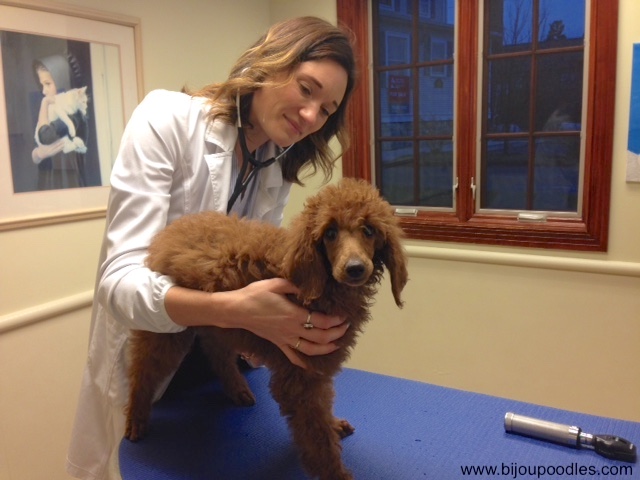
Pups will have had a visit to the Vet for a physical Health Wellness Check up and their Spay or Neuter
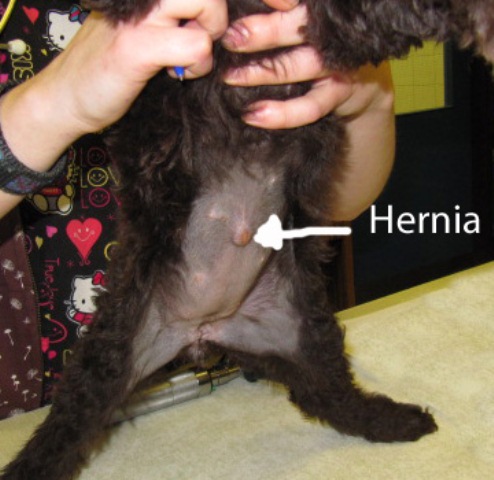
IF our Vet feels that puppy has a
Hernia in need of repair, we will get that done as well.
The puppies will now be very active and will be playing for a few hours a day.
They will be very rough with each other and there will be lots of ear tugging!
Puppies will also receive an International Health Certificate
from our vet to attest to the health of your puppy.
Ocassioinally we have had males with undescended Testicals which just means
they may or may not be down at the time of the neuter. No big deal.
Ocassionally our pups will have lower jaw be narrower than the top jaw
pups are still growing and maturing and this poses no health issues.
4x in our 30 years of involvment in breeding, we have had heart murmur and generally speaking
the pups have Grade 1-3 if detected at this young age, it will disappear as they mature.
Umbilical hernias while not common may happen and for $50 a Vet can fix during spay/neuter.
Dewclaw regrowth can also be removed, as can any retained baby teeth.
Pups within the USA may also receive a Health Certificate from a USA Veterinarian from our Vet Clinic there.
Pups day 49
Bijou Puppy Play area in 2005
WE constantly assess and evaluate what our pups need to THRIVE
and we are constantly making improvements on what we provide to out pups to achieve optimal
health, confidence, and be loving companions.
While this set up "worked" we wanted to povide MORE...
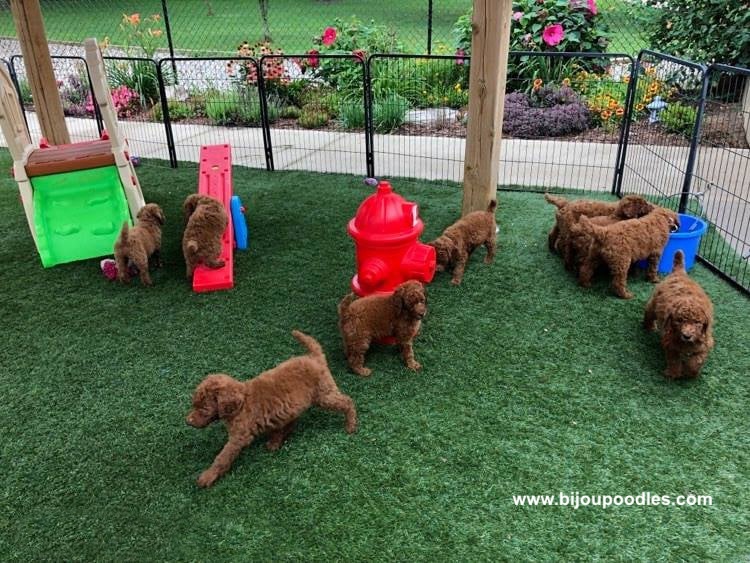
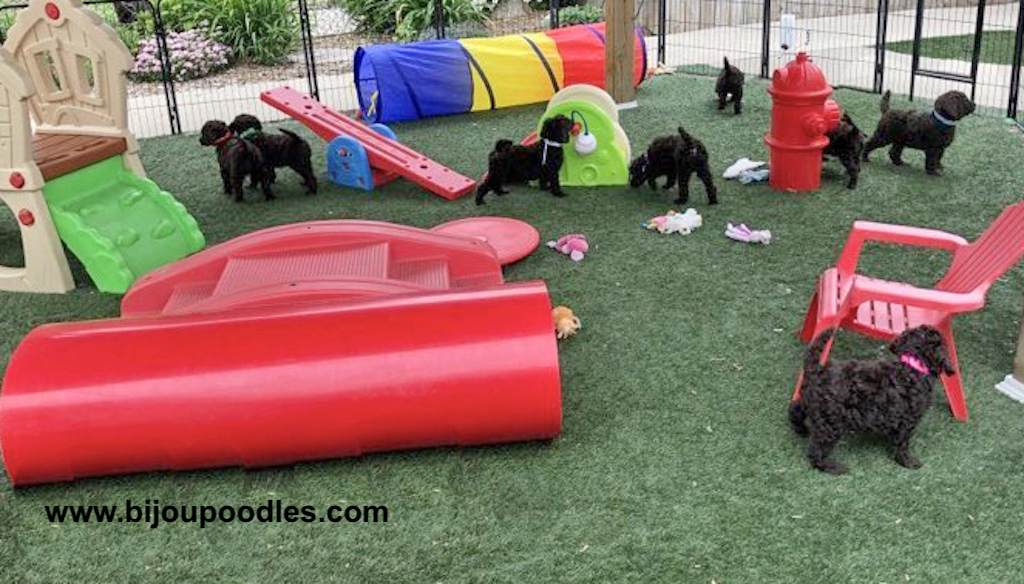
At this stage (subject to the weather!) babies can play outside in their puppy play yard.
Always ensure the area is 'puppy proof' i.e. no gaps in fencing and hedges etc.
Also watch for birds as if they poop in a food source or water bucket,
could give your pups Coccidia (cure for that is tx with Baycox)
NEW Bijou Puppy Play area
Bijou Poodles designed and had built a special puppy play area
so that our pups can remain clean, and parasite free
and have lots of mental and physical stimilus to help them
mature and develop confidence and to be FEARLESS by the time they go home.
...
Pups receive their second bath and blow dry.
Pups are also introduced to having their nails Dremelled.
Up until now, they may have just heard the dremel working. *Click here to read more about grooming
...
NEW 2015
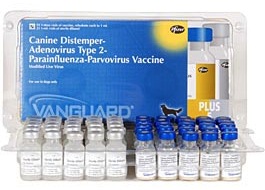
Puppies will NOT have their first vaccination from us
Your puppy comes with maternal antibodies, that will provide puppy
with protection/immunity, for Distemper, Adenovirus Type 2, Parainfluenza, Parvo
until puppy is 16 weeks of age, minimally (most often longer)
until puppy receives their first vaccine OR until a Titre shows puppy needds a vaccine.
If you wish to do a series of "3" vaccines
then puppy will need one when they come home at 9 weeks of age
and two more shots, 4 weeks apart the first year.
Puppy will need a vaccination 12 months later, and then not again for 3 years. *Read more about Vaccinations 'before' you choose to vaccinate.
Puppy Package
Pups day 49
Now is the time for us to say goodbye....... and..... for you to say "hello" to your new family member
Refer to our Shipping Page for more information about having your puppy shipped to you.
Bijou Poodles no longer sends our pups home with a Puppy package due to 2020 LOCKDOWNS.
Puppies being shipped will have all information emailed (we are paperless), but puppy will arrive
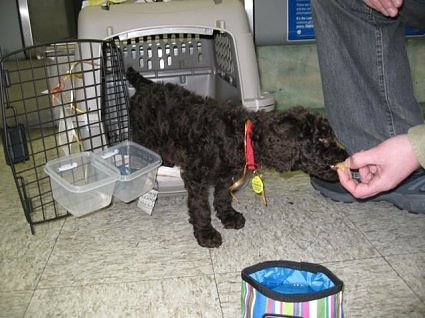
with cage, collar, leash and health certificate.
Our contract does stipulate that our "Bijou" name appear first on our Red puppy's registered name
and "K-Lar's" name appears first on our Brown puppy's registered name, to reflect that we bred that puppy
and aid others in following our amazing lineage. If puppy has not been Altered prior to going home
new owners agree to have their pet puppy altered prior to 12 months of age.
Once we receive proof of alter, and a full sized standing photo of puppy,
ownership/registration papers will be mailed out to the address we have on file for you.
Until this time puppy remains in my name as owner to ensure compliance to the spay/neuter.
Pups day 49 -
The puppy should be happily settled in his/her new home now.
The puppy will need first vaccination at 16 weeks of age
providing puppy still has maternal antibodies when sent home.
Review our Vaccination page for current practice.
Pups Day 70
Pups day 91
The puppies are 16 weeks old now, they should have had their 1 and only CORE vaccination and they will just need a Rabies done no sooner than 6 months of age
Day 112
The puppies are 16 weeks old now, and be ready for puppy classes
Rabies vaccine should not be done before 6 months of age
Rabies will be due again the following year and then every 3 years (legally) after this.
Make sure your Vet signs the "revaccination" date to reflect a 3 year due date not YEARLY.
You may wish to start on Advantix Flea control or Revolution.
Revolution requires blood samples prior to receiving the topical drops
that also prevent flea and heart worm, if heart worm is a problem in your area.
You can read more about flea control here *Heartworm, flea & Tick Control.
You are the paying customer (the one in charge) so make sure you fully understand what you are putting on your puppy.
IF you require treatments then we recommend Revolution topical 1x a month treatment which prevents
against heartworm, roundworms, hookworms, fleas, ticks, and even mites when used as directed.
Puppy at 112 days old or 16 weeks of age
The puppies are 16 weeks old now (4 months) and could have their Rabies vaccination
now and be done with the Vet visits & vaccinations for the year.
Or as we would prefer... Rabies should be done at 6+ months of age
and it is valid for 3 years !!!
Development of Puppy For Owners
7 to 12 weeks
Puppy needs 20 to 22 hours of sleep to grow and develop his body and mind.
This is the number one neglected aspect of raising our precious new friend. It is often why uninformed owners have a puppy exhibit ill temper; the aggression can be due to sleep deprivation. Think about how you feel when you don’t get your proper sleep. Now place yourself in an environment where it is difficult to communicate to another species . . . Oh no, they just let the neighbor kid alone with you! I believe you get the idea. Well, you take a breed or line of dogs that is strong-willed and ZAP, the puppy nips to express that it just wants to sleep! Unfortunately, many of the pets you pay with your taxes to have euthanized at the county animal shelters became "nasty" dogs because an uninformed parent used the puppy as a living "child entertainment center". Please pass this reasoning on to anyone you know who is considering a new puppy.
The above warning helps you to start to see the world as a puppy. Hopefully, you have looked long and hard to find the right character in your new canine companion. His family tree is brilliant with individuals of strong breed character whom have led faithful and outstanding long lives with their owners; his sires have proved themselves as breed champions or obedience wins. You found a breeder with the attitude about breeding dogs that you found ethical and reputable.
So, you met the parents of your puppy or at least the mother, and they were of the character you hope to develop in your new friend. Do not be alarmed if the sire lives some distance, perhaps even a continent away, it is the better breeder who utilizes the world’s pedigrees. The mother should be a nurturing jewel of a lady. You asked to see her off lead in an open area or in the house. She listened respectfully to her owner and played gently with your children and came to great and sniff you. That’s the type of willingness of cooperation that you wanted in your new puppy. Perhaps the mother is also a champion or obedience title holder. The most important thing is she is loving and stable. She instills her temperament in the puppies as she nurses them for six weeks. Puppy is confident and curious. He is bold, yet sensitive. He comes from a long line of outstanding "best friends" that the breeder was happy to tell you stories about as they showed you pictures and health test reports. This new little friend is very proud to be your new pet and that attitude is what you capitalize upon to help you in training. Understanding an intelligent, well-bred puppy’s outlook is your first assignment in learning to allow this bond between man and dog to evolve respectfully. You watched his temperament testing and you know about his desires and fears. He is canine, a pack animal. You are now the pack leader. Big responsibility if this is to go without a lot of mistakes! Second important lesson: the puppy’s mistakes are YOUR mistakes! My pups generally test with an excellent response to voice requests. It is important to talk to your puppy. Vary your tone, to the point of exaggeration, to reflect the meaning of the communication. Bark your displeasure and coo your praise. Not until dogs are much older do they understand individual words. At this age, tone is your key
A special note must be made here as recommended by Dr. Dunbar, "avoid names that begin with s, sh, or hissy sounding tones." In nature, these sounds mean danger. Snakes hiss, cat’s hiss even people say shhhh when they want an action to stop. That’s what you communicate to "Sassy" or "Chanel." There are successful pets by these ssss sounding names, but could they have been even better not having to overcome this handicap? The puppy looks at you timidly as you are calling him to come, but you keep saying that sssss sound. "Samson come, Samson it’s ok, Samson come," yet all the time you look like a nice person. The puppy remembers you feed it, but it better just urinate to show submission so you know it’s not a threat and you can stop saying that sssss sound! In further training the commands to sit, stand and stay (as well as the politically incorrect "shut up") will all be that much more work for your puppy to decipher from his own name. Actually, you should only use your dog’s name with a command when you want an action to be performed. "Jake sit, Jake shake," would be correct. "Jake stay," is incorrect. In this case you may ask for the dog’s attention, praise the eye contact, then give the command firmly, "stay."
The second biggest mistake new owners make after bringing the cutie home is letting the puppy run around everywhere. Never would I allow a pup to leave the kitchen the first few days unless he’s directly on his way outside. If you would like my formula for no mistakes in the house, read on. You must be fair in training your puppy. Some pups hold grudges and give you another hurdle in training. This trait is usually reported during the temperament test. Other pups take or require more instruction or correction. You will be able to tell from your results how much pressure to apply. Reward with love, and for monumental accomplishments, FOOD. Camera One Canine Actors in San Diego recommends, "Play for 5 minutes, train for 5 minutes," and keep alternating, especially when the pup is young. This sets the mood of training as a fun time with the owner. But at 7 or 8 weeks of age what the puppy has to learn are the basic house LAWS. Your pup will have no problem understanding his own area if it is strictly defined. Remember you are setting the rules that are to be followed (or ignored from time to time) for the next 10 to 15 years. So please be strict the first few months so your adult dog is a pleasure and comfortable in anyone’s home. A few slips of following the guidelines will be setting your pet up for a few slips of the laws in the future.
Keeping your pup in the kitchen is fair training. You have given strict boundaries. Everyone in the house knows it. Your spouse respects the law; the children respect the law. And if no one breaks the law your pup will be content in his new home. Only adults are in charge of making certain the pup’s schedule is kept. They are the ones that take him to the outdoors for relieving himself. Remember, I said this is how we make no mistakes. Everyone likes to gather in the kitchen and kitchens usually are not carpeted. This is why I recommend this central, high use room. People do not gather in the laundry room or the spare room in the basement. That is why the kitchen is fair. Children can play with the puppy in the puppy’s space while a parent prepares meals, etc. Taking the pup to another room (say to watch television) one night and not the next is asking for a lot of howling. Taking the pup every night in to another room is asking for your first accident. The puppy is too young and you can not watch television and the bottom end of the puppy at the same time. The goal here is no mistakes. The puppy is sleeping a lot at this age and if he is wide awake perhaps you could adjust his schedule so he is going to sleep as the household winds down for the day.
For my pups I recommend an exercise pen made of strong gauge wire at least 32’ high and having a door. Set this in a corner of the kitchen, giving up about 4’ by 6’ to your new project. This is temporary and useful for about the first 6 to 8 months. Remember – no mistakes. House law number 2 is never, I said NEVER, lift the puppy over the top of the exercise pen! Make certain your spouse knows this law, that the children know this law and that Aunt Matilda visiting from Canada knows this law. If the pup is shown just once this new way out you might as well fold up the spacious pen right there and then. And then training just became unfair. Second choice is the dreaded crate training method. My pups are too smart and sensitive to enjoy living in one of those things. So, make certain everyone knows the LAW. Always use the door to put pup in pen or to take him out.
Have the pen set up before the puppy comes home.
Also you may have his food made and waiting in the fridge. You may warm it to room temperature when he gets there. Nothing will make a pup in a new situation more comfortable than you having control over his space and showing it to him (everything set up) and the aroma of his food being gently warmed and served will be just what a puppy needs. Ahhh, sigh, he’s home. Thinking like a puppy some more, make certain that half the exercise pen is covered in newspaper for his toilet and the other has a nice blanket, lots of toys, a hanging water bowl and a spot to place the food. Once he has eliminated on the papers and has become a bit calmer, give him his food near his bed. Tell him calmly how proud you are to welcome such a fine intelligent member to the pack. As a reward for "pottying" in the right spot (I say, "Go potty on the papers – good puppy") give the pup his first food reward in your pack. As he is checking this food reward by licking and nibbling say some low tone encouraging words. Go ahead and cover the urine or feces with a sheet or two of paper. Knowing that all this is ok will make him comfortable and relaxed. Taking him to the back yard to "potty" may be useless these first few days. An important notion: a new area to explore is to be used as reward for understanding the laws so far. If each area is introduced slowly and only after the first room is understood, you will be well on your way to bragging "no mistakes!" Do not rush the process.
This has been a detail of the first 7 to 12 weeks. As you get closer to 12 weeks you will note the pup stops defecating in his exercise pen between walks outdoors. Then, the urination will be more controlled as well. Some house training manuals say to regulate the amount of water for the puppy. I believe fresh, clean purified water (not conditioned by water softener or chlorinated) should be available at all times. Please feed and water from stainless steel dishes. For the water I recommend a galvanized 2-qt. bucket held by a 3 or 4-inch double snap to the side of the exercise pen. Catalogs that carry the pens will have these buckets available. The snap you will need to buy at the hardware store. The water being held to the fence this way prevents the bucket from spilling the water everywhere. If the pup spills his food he can eat it off the floor; if he spills his water, besides being a big mess, he is without water. Studies show that dogs prefer water cool (not cold) and 3 to 5 inches deep in their pail.
12-14 weeks Puppy should be staying "clean" all night and most times between outdoor exercise and relief. If you have had no mistakes so far, you may start one room at a time rewarding your puppy for perfect pack behavior. Your "cave" is to be respected and a slow introduction to each room is key to maintaining respect from your adoring pup.
Always take puppy out to "Go Potty" every 2 hours (at the least) when pup is out of his pen. Share some evenings with the puppy. Have puppy lay by your side quietly as you read or watch television; play a little fetch in the family room, or help you add a web page about him to THE RING OF POODLES. If he’s been trustworthy, let him now venture to a NEW room with you! All the time you should tell him that he has earned your trust. Tell him, "I trust you now in this new room – follow me." Do not enter rooms with the puppy that you wish to be dog free. And make certain the behavior you allow him to carry out while you are watching TV (or reading, etc.) is going to be what you will put up with when he grows another 50lbs! Remember to be fair in training to build trust.
Now is a great time to introduce basic obedience. My line of poodles trains easily with food reward "initially" as young pups.
I have seen this method produce problems later in life, with dogs only working for food and only when hungry.
Food will work, but after the puppy knows the command switch to praise for the reward and or play
as soon as you can. A good pack leader should never have to "BRIBE" their followers. A good leader leads by respect.
Check out our Obedience web page for some assistance and examples.
A puppy kindergarten class with minor agility aspects would be nice for you to attend if you have found the best class possible in your area. Not the closest, not the cheapest, but the one that the top dog sport competitors are sponsoring or attending. This takes a bit of research and maybe some driving will be involved. It is worth the extra effort to learn from the best right from the start. You'll learn the proper footwork and body language to help train your "blank slate." Keep it simple, fun-fun-fun, and non-demanding. Don’t go too fast. Learn one command thoroughly before going to the next. It is good to take your pup along to strange places. Be cautious about letting him sniff around dirt and shrubs where other dogs may have defecated. Pups are VERY suseptible to Parvo virus. Do not let your puppy sniff other dogs and vice versa instead distract with a .."watch me"... command and a light jog in the opposite direction and praise for eye contact. Your puppy is most vulnerable to viruses and disease at this age. Just explain to other dog owners that you are being intelligently cautious! Pick your puppy up off the ground if another owner doesn't respect your non-contact requests. NEVER yank puppy away and say "NO" !! as this will create a puppy that is aggressive towards other people and dogs. Use "happy" voice and change direction, clap your hands "over here".. or a toy for distraction instead.
Skip the puppy kindergarten "classes" where they believe that letting all the pups run together in a free for all is teaching them important manners. Some pups may need that ... not yours. You were smart to locate a puppy to buy that stayed with its mother and litter through the crutial six weeks of age. Your puppy learned important lessons then. Not in the midst of a bunch of pups of questionable backgrounds all on different vaccination schedules.
Investigate the course instruction. Puppies should be kept on lead, with a buckle collar with focus on their owners. Each is learning and focused, NOT sidetracked by a riot of pups running loose and out of control. Instructors should appear sharp with lots of direction offered to those that need assistance. Look for a calm, well-run class.
Your pup's spirit is already high and happy. He is well adjusted, daring and enthusiastic. Your mission is to maintain that spirit and guide it under your control. CONTROL is GOAL when I train my poodles. This method at this age has produced First Place, High in Class and High in Trial winners in Obedience for me. Dependable obedience is achieved with a smile from your dog. Dogs love to have guidelines and boundaries. Dogs appreciate being gently guided by strong, kind hands. NEVER EVER EVER comfort or baby talk to a scared Poodle puppy
as this will make them forever fearful of what ever situation you are in. Instead always act the way you want your puppy to react.
Fearless and confident and sounding in charge.
16-20 weeks
It's here !! Teething. Do not stress your pup now.
Keep everything simple and give him lots of bones to chew. I do not recommend introducing new lessons. Work only on what your pup knows already. Insist only on maintaining house manners, lessons already learned and keeping the teeth on HIS playthings.
Some baby teeth may grow into the gums but don't worry. The gums will make room for these baby teeth and they will soon fall out when the adults come in.
A note about teeth: remember when you shed your deciduous teeth at age 6 or 7? Twisting the tooth around until it came out. Bothered by the next one coming loose or the new one coming in. Well, your pup thinks about his teeth a lot right now. You can help the proper alignment of the bite by encouraging the top incisors to come out first. If the upper permanent teeth are coming in to place well before the bottom incisors they will hold the bottom ones in better position. If they come in simultaneously, there may be a crashing of the upper and lower permanent teeth. Instead of meshing nicely (the top slightly over the bottom teeth – like your own) the bite could become undershot or wry. It’s good to be aware of this uncommon malady that could be prevented with a little encouragement of the upper incisors to loosen first. Pushing gently with your fingers is all that is necessary to help the process.
Most owners don't pay that much attention to the teeth. If you have read this far you are not just another average owner! Dental problems are rare in a strong line of poodles like mine. And now I just gave you something else to fool with these weeks!
At about 8 months
Teenage begins. Hold on to your training once again until the "testing" of your limits by your puppy settles down -- oh, at about 14 months of age.
14-16 months
In addition, serious training of several times per week will make a willing star performer of your great dog.
90% of time spent sleeping
10% eating
Susceptible to heat/cold
Instinctive reflexes: crawl, seek warmth, nurse
They can right themselves if placed upside down
Needs stimulation for urination/defecation
Rapid development of central nervous system
Need constant care from female
Rectal temperatures 94-97 degrees Farenheit
Pups may lose 10% of weight after birth, but should start gaining again
Weight should double by end of week
Care of the puppies
Chart weight
Examine puppies daily
Trim nails weekly
Pups at one hour old
Keep whelping box around 85 F/29 C (this means if it's hotter than that out, put a fan in the room or turn on the air conditioning, if it's colder than that get a heat lamp to put above the whelping box) When you handle the puppies, it's a good idea use a towel when you hold them The puppies urinate upon stimulation and will inevitably find your attention stimulating! Dew claw and tail docking must be done between day three and day five.
Care of the female
Keep dam on fluids for first 24 hours (i.e.. chicken broth, etc.)
Feed three full meals a day after that
Check mammary glands twice daily (looking for signs of mastitis -- swelling, hardness, pus, etc.)
Keep an eye on vaginal discharge (looking for signs of infection)
Make sure female eats, drinks, and relieves herself
To do list
Keep detailed records on puppies' weight and behavior
Keep charting female's temperature
Call puppy buyers with results of whelping



 ...
...
 .........
.
.........
.
 ....
....

 ....
....
 ...
...

 ...
...