Bijou Poodles is not anti-vaccine. We are PRO continual Education.
I try to stay current in the latest medical information reguarding Pet Health
And as a result I may change and or update my web page, based on current information.
As of 2026 We have chosen to follow Dr. Ronald D. Schultz's vaccine protocol.
HE is a pioneering veterinary immunologist, known for his work on pet
vaccination guidelines and antibody titer testing and he makes the most sense to me
especially with my having a medical background.
We will vaccinate after 18 weeks of age and only for the following: Distemper, Adenovirus Type 2, Parainfluenza, Parvo (MLV) 2026 - NO ....R N A ... !!!!! Nobivac NXT Rabies uses R N A
We feel more time is needed for reviewing short and long term outcomes
before we would trust them, for our cherished pets.
Your puppy comes with maternal antibodies, that should provide puppy
with a 'natural' STRONG protection, against: Distemper, Adenovirus Type 2, Parainfluenza, Parvo.
Some may think once their dog is vaccinated they can't catch a virus
but this is not true.
Viruses also are survivors, and have different strains and reinvent themselves.
So unfortunately, dogs definitely can still catch a disease, even if they are vaccined for it.
Maternal antibodies passed from mom to pups, are said to be more robust, stronger
response/protection, to viruses, than artificially generated response from vaccines.
It is also believed that natural immunity (aquired through mom) is more effective
as it is developed for current strains, aquired through mom's constant exposure to other dogs and environments.
Maternal antibodies are said to be present (detectable) until puppy is 18 weeks of age (often longer)
And this is why we encourage our puppy people to research, and consider vaccinating after
18 weeks of age.
letting puppy's immunne system do it's job.
The best and most effective method to check for antibodies to titer test
Keeping in mind that ANY amount of Antibodies present,
means that puppy HAS what the Veterinarian community call aquired "immunity".
However feel free to "challenge" this, by doing a Titer on your puppy, checking for Antibodies !!
When we first heard about passive immunity, we immediately decided to tire, instead of vaccinating
to challenge, and test this, and were very pleased to find out, our pups had desired antibody count (what is called, protection).
I have shared what my Vaccination protocol is for pups I keep above,
and this is what I hope you will also follow. However, this being said
I have received feedback that
Pet Obedience Schools, Day Care and even some Dog Parks to "cover their butts"
will only accept a puppy, to their areas, that have proof of having had a series of 3 vaccines.
So if you wish 3 vaccines:
9 weeks of age: Distemper, Adenovirus Type 2, Parainfluenza, Parvo (MLV)
12 weeks of age:Distemper, Adenovirus Type 2, Parainfluenza, Parvo (MLV)
16 weeks of age: Distemper, Adenovirus Type 2, Parainfluenza, Parvo (MLV) PRE-PLAN your Visit Always stay with your pet so you can supervise, control, what they are doing NEVER let them take your pet "to the back" for blood work or vaccines
If they refuse to have you there, with your pet, LEAVE and find a Vet that will respect you.
We have had pups receive the wrong vaccine, and even vaccinated 2x in one visit and seizure !!!
there has been numerous reports, of pups beaten and or injured.
Always visit the Vet Mon-Thursday in the morning
so that should puppy have any reactions, the Vet will still be open.
We also encourage you to space out the Rabies and any other vaccines you get.
Preventative and or Treatment for Vaccinosis symptoms (dogs adverse reaction to vaccines):
Silica, Thuja (you can give as a preventative prior to receiving vaccines)
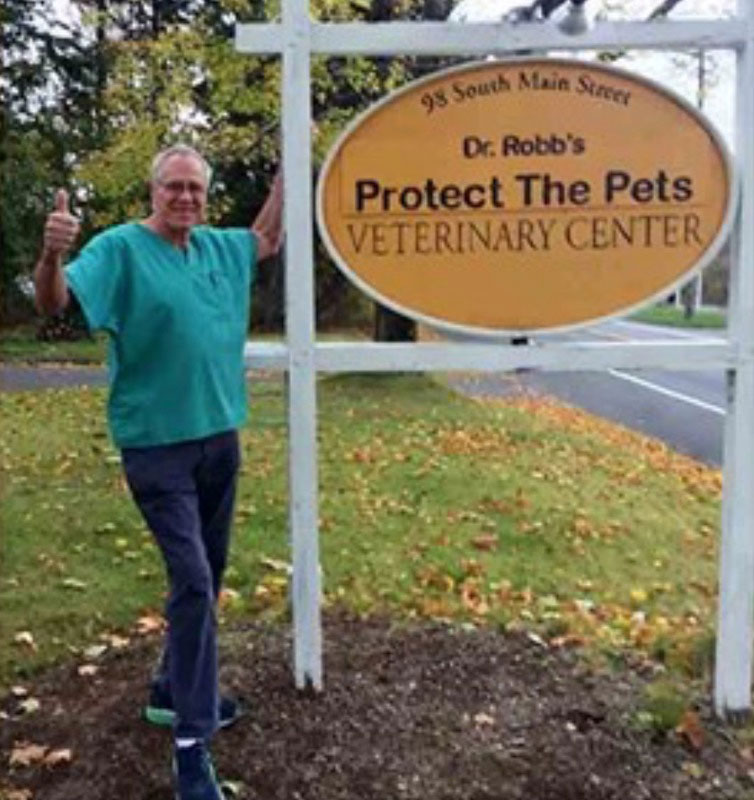
98 S Main Street
Newtown, CT
06470, United States
203-690-2866 or drrobb@protectthepets.com also on Facebook as Protect the Pets
Dr. Robb has been very proactive about NOT over-vaccinating and so
he is offering Titres at an affordible price to help fight overvaccination. *Click here to ORDER a Titre from Dr. Robb
Rabies (RFFT) $55
Rabies (RFFT) + Core $80
Core Only (Distemper, Parvo, Adenovirus) $50
Rabies End Point Titer (not for travel) $125
VACCINATION FACTS
Your puppy is said to have protection 36 hours after receiving Vaccination (if vaccination was needed)
Your puppy could "shed" antigen or be contagious 3-10 after receiving a vaccination.
Maternal antibodies (protection from common canine diseases) should last at least until 16 weeks of puppy age
RABIES
LEGALLY in most of North America, you are only obligated to vaccinate for Rabies
every 3 years as of 2017
(soon to be changed to every 7 years) 2023 - rabies is also being produced with M R N A... please avoid this !!!!
THE REST IS UP TO YOU, NOT YOUR VET
WE RECOMMEND WHEN IN DOUBT TITRE TEST:
Dr. Robb has been very proactive about NOT over vaccinating and so
he is offering Titres at an affordible price. *Click here to ORDER a Titre from Dr. Robb
drrobb@protectthepets.com also on Facebook as Protect the Pets
Rabies (RFFT) $55
Rabies (RFFT) + Core $80
Core Only (Distemper, Parvo, Adenovirus) $50
Rabies End Point Titer (not for travel) $125
Our vet and most "health clinics", charges $50.00 for Titres.
BUT, this is my belief and you will have to read current information and make
an informed choice for yourself and your Poodle. Your Vet works for you and is a salesperson
with products to sell, it is up to you the owner to make informed choices for your pet's health !!!
Read more about Flea, Tick and Heart Worm are Pesticides !!
flea/tick/heart worm
Too many dogs have overdosed on these Poisons that acts on thyroid gland and central nervous system
Flea/tick/heart worm chemicals Kill parasites.
NEVER routinely treat for multiple parasites as you are giving your puppy multiple chemicals.
In 30 years I have never had and never treated my dogs for Heartworm
because there is very little if any incidence around me.
I do not routinely use flea/tick products, as again I have no issue.
IF I travel I will use Revolution or Advantix II the 1x and that eliminates the problem.
I do want all my puppy people to be aware that the chemicals they put in and on their puppy
may cause permanent damage to organs, neurological systems, and many cause cancer. So choose wisely.
One of my worse exposures to SUPER FLEAS happened in Florida, and I did choos to put
My dogs on NexGard for 2 months to clear that up after weighing pros and cons.
Our health guarantee is void if anyone uses Lyme, Leptospirosis and or Coronavirus V.
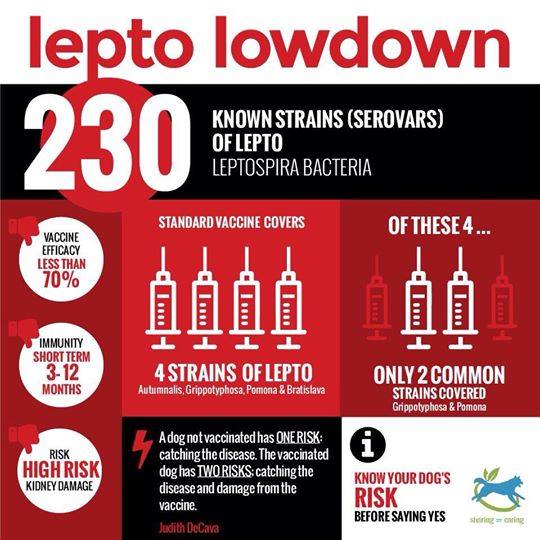
It is a relatively weak bacterial vaccine that is short acting
and can't protect against all 20 serovar of the Leptospira bacteria.
In fact, it is actually ineffective for the current serovar that
is causing the majority of infections in my area today.
The leptospirosis v. is a bacterin (a vaccine made from killed bacteria)
which in and of itself won't prompt
an immune response to make antibodies, so a powerful adjuvant
(usually a heavy metal such as aluminum or mercury, aka thimerosal)
is added that elicits a strong immune system response.
Because of this, it also carries a significantly greater risk for adverse reactions.
Information has recently emerged that the v. can actually cause the disease in dogs,
and it has also been linked to early kidney failure in older animals.
Leptospirosis symptoms are pretty easy for owners to spot and receive treatment for.
Most common antibiotics will kill leptospira such as ordinary penicillin,
tetracycline and erythromycin all work well.
So owners have to consider if the 1/1000 chance
(please confirm stats for your area) of their dog catching Lepto,
is worth the risk of yearly exposing their dog to life threatening toxins
being injected into their dogs, causing lifelong health problems.
INFORMATION ABOUT VACCINES:
NEW PRINCIPLES OF IMMUNOLOGY
"Dogs and cats" immune systems mature fully at six months.
If a modified live virus vaccine is given after six months of age,
it produces immunity, which is good for the life of the pet
(i.e.: canine distemper, parvo, feline distemper).
If another MLV vaccine is given a year later, the antibodies from the first vaccine
neutralize the antigens of the second vaccine and there is little or no effect.
The titer is not "boosted" nor are memory cells induced. Not only are
annual boosters for parvo and distemper unnecessary
they subject the pet to potential risks of allergic reactions
and immune-mediated haemolytic anemia.
There is no scientific documentation to back up label claims for annual administration of MLV vaccines.
Puppies receive antibodies through their mother's milk. This natural protection can last 8-14 weeks.
Puppies and kittens should NOT be vaccinated at LESS than eight weeks.
Maternal immunity will neutralize the vaccine and little protection (0-38%) will be produced.
Vaccination at six weeks will, however, delay the timing of the first highly effective vaccine.
Vaccinations given two weeks apart suppress rather than stimulate the immune system.
A series of vaccinations is recommended given starting at
eight-nine weeks and given three to four weeks apart up to 16 weeks of age.
Another vaccination given sometime after six months of age
(but usually at one year of age) will provide lifetime immunity.
Most Leptospirosis strains (there are about 200) do not cause the Leptospirosis disease
and of the seven clinically important strains
only four ~ L. icterohaemorrhagiae, L. canicola, L. grippotyphosa, and L. pomona serovars ~
are found in today's vaccines.
So, exposure risk, depends upon which serovars of Lepto have been documented
to cause clinical leptospirosis in the area where you live.
You can call the county health department or local animal control and ask.
Dog Vaccinations Be Informed
DHLPPC:
This is a combo vaccination that covers numerous diseases with one injection. What do all those letters stand for?
D = Distemper:
Distemper is a nasty virus that is highly contagious, occurs world wide, and at one time was the leading cause of death in puppies. Young puppies are more susceptible to the virus then adult dogs. You may see signs of an upper respiratory infection with a high fever, the dog may also have neurological signs. This disease is often fatal.
H = Hepatitis or Adenovirus-2:
This is spread by contact with the urine and feces of infected animals. The virus causes liver and kidney damage, animals that survive may have chronic illness. Symptoms include but are not limited to: fever, lethargy, anorexia, abdominal pain, and bloody diarrhea.
L = Leptospirosis:
This disease affects the liver and kidneys and is deadly. Animals with this disease are contagious to other animals and humans. A positive dog should be isolated and the caregiver should wear protective clothing and gloves. The disease is spread through contact with urine of infected animals. Dogs with leptospirosis may show signs of lethargy, dehydration, jaundice, and fever.
P = Parainfluenza:
This is a virus that causes an upper respiratory infection. Dogs usually contract the disease through contact with nasal secretions of infected dogs.
P = Parvovirus:
This virus attacks the intestinal tract and causes severe vomiting and diarrhea. Parvo is highly contagious, dogs contract the virus through contact with an infected animals stools. Without treatment dogs become dehydrated and weak and often die. This virus is very common and puppies who are not properly vaccinated are often afflicted. Rottweilers and Doberman Pinschers seem to be at greater risk for parvo.
C = Corona virus:
This virus attacks the intestinal system similar to parvovirus. Infected dogs suffer from vomiting and diarrhea and dehydration. Keep your pet vaccinated and your yard clean to protect your pet.
L = lyme Disease:
Some of the symptoms and pathological changes associated with Lyme disease are very similar to those found in autoimmune disease. a small portion of infected dogs do develop sore, painful joints weeks or months after infection. Some of these dogs run low-grade fevers. The signs you read about in humans with Lyme almost never occur in pets.
Simple arthritis is usually constant in the joints it affects. But lameness due to Lyme disease often shifts from leg to leg. These swollen joints are usually hot and painful and occasionally the lymph nodes at the base of the legs may be slightly enlarged as well.
The front leg are most commonly affected. When they are, it is the lymph node on the shoulder of that leg that may be enlarged. Many of the sick dogs are depressed. They may yelp when these joints are pressed and be quite reluctant to walk. When they do walk, they walk with a stiff shuffling gait and an arched back because of the pain. Prevention is key
Flea and Tick prevention options and if your dog is exposed to ticks then perhaps yearly testing might also be an option for you to consider.
VIDEO INTERVIEWS WITH VETS ABOUT VACCINATIONS
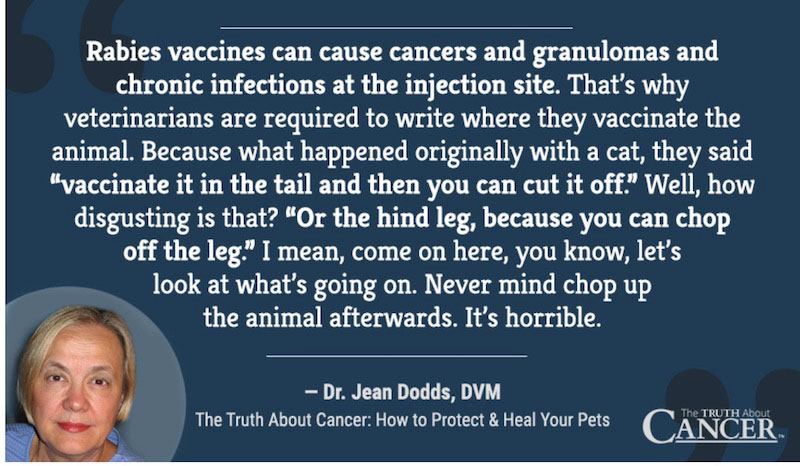
W. Jean Dodds, DVM HEMOPET
938 Stanford Street
Santa Monica, CA 90403
310-828-4804; Fax 310-828-8251
e-mail: hemopet@hotmail.com
While researching the Standard Poodle and other dog breeds readers will undoubtedly come across information on breeders web sites
about vaccination protocols for their puppies. Most breeders are advocating "limited" vaccination,
some have gone to no vaccines what so ever, some are doing titres to test the need for revaccination
some are dividing up vaccinations and few are still doing what they did 20 years ago. Unanimously breeders all agree Rabies
if given, should be given 2-3 weeks apart from regular vaccinations.
This is because vaccines can cause changes in the immune system of dogs
that might lead to life-threatening immune-mediated diseases.
The breeders who are advocating limited vaccines are not unique in their stance on vaccines.
Breeders of other breeds, Weimaraner, Vizsla, Labs and Toy breeds, etc..are also advocating limited vaccine as are Vets,
breeders and owners become aware that vaccination protocols are no longer considered a "one size fits all" program.
Gotta face it. To Veterinarians Vaccines mean income = $$
Breeder's have to view Vaccines and how they will effect their precious puppies, short and long term.
Some Breeders are even including vaccine protocols, in their purchase contracts to protect their pups
from Vets who are so routed in routine and income that they don't have the pup's best interest at heart.
Whatever your view, it has become apparent that some Standard Poodles may have an adverse reaction to some vaccines.
These reactions can range from a simple lump, to autoimmune changes, to seizures and in a few rare cases death.
It is also widely acknowledged that vaccines can cause a fast-acting, usually fatal,
disease called Autoimmune Haemolytic Anaemia (AIHA)
So before you call your breeder when your puppy becomes ill or has allergy symptoms,
ask yourself "when did I last vaccinate my puppy".
Limited vaccination can be interpreted many different ways but what you feel comfortable with as a breeder and as an owner is paramount.
There are many, many sites on the internet both pro-vaccine and anti-vaccine. So sort through the information carefully.
Many people believe "WRONGLY" that legally their dog is required to have annual rabies vaccination.
In Ontario the law states : a dog 3 months of age or over must be immunized against rabies,
and then reimmunized (i.e. given a booster) by the date specified in the immunization certificate that is issued at the time the vaccine is administered.
Basically the dog must be re-immunized when the Vet states on the certificate so make sure your Vet writes down next rabies due in 3 years time.
This information is available online on the Health Protection and Promotion Act
and R.R.O. 1990, REGULATION 567
Vaccinosis is a disease syndrome that is triggered by vaccination.
Vaccinosis is becoming rampant in the dog population.
Examples of vaccinosis include autoimmune diseases, irritable bowel disorders,
lupus and pemphigus; hypothyroidism in dogs; eosinophilic skin disorders, hyperthyroidism
asthma, chronic skin disease or allergic dermatitis in dogs.
Many times people assume a dog has a food allergy when in fact they are reacting to Vaccines.
These diseases are identified as vaccine-related conditions for two reasons:
1. The onset of the symptoms is associated with the date of vaccination in many cases.
Usually, two weeks to one month following a vaccination,
symptoms such as skin problems, malaise, muscle weakness, diarrhea or asthma.
2. Patients seem respond and get better when treated for Vaccinosis.
Homeopathic remedies are often effective on vaccine-related problems.
Some of the more common vaccinosis remedies used are thuja occidentalis, silicea, sulphur, malandrinum, mezureum and lyssin.
Lepto and Corona Vaccines were said to be the vaccines to be cautious of,
because they caused the most sever reactions, including seizures.
Manufacturers assured the medical community that the "extender" used in the vaccines
was changed and the extender would not cause allergic reactions.
As a result of this change, Vets felt reassured by administering these new improved vaccines
however the adverse reactions are still happening. Read about Vaccinosis symptoms
Dr. Ron Schultz, Dr. Richard Ford, and many other veterinarians have stated they don't recommend the Lepto vaccines.
The reactivity associated with Lepto vaccine can make a patient very itchy for three to four years and most agree,
the vaccine is incapable of protecting a dog against Leptospira and worse yet, if the dog were to develop
a Leptospira infection to one of the serovars transmissible to man, the owner would be at greater risk
of suffering a Leptospira infection because his/her dog was vaccinated !
Dr. Ron Schultz only recommends vaccination one time at 15 weeks of age for dogs and to only distemper,
adenovirus and parvovirus. It is proven that IgE hypersensitivity results and the animals can suffer much
greater allergies as a result of being vaccinated. Not only this, the thyroid is suppressed
as a result of vaccinations for at least 45 days following vaccination.
Other examples of vaccinosis cases are seen after receiving the Rabies Vaccination.
Symptoms are aggressive or fearful behavior problems, reverse sneezing and or seizure activity.
Since some communities by law require a Rabies vaccine (make sure your Vet writes that the next shot is in 3 years !!)
It is reccomended by some homepath Vets that by administering a dose of 30C lyssin
(a homeopathic remedy) seems to decrease the long-term side-effects of vaccination,
if given at the time of the Rabies vaccination.
Lepto is also said to be on the rise, so it is important to consult with your vet to weigh the pro's and con's of vaccinations.
IF you are vaccinating, make sure to book your appointment first thing in the morning and ALWAYS Monday to Thursday
so that if your pet does have an immediate allergic reaction, your clinic will still be open to handle the emergency. *Click to read more about Heart Worm, Flea and Tick Medications
Dr. W. Jean Dodds DVM takes a more balanced approach with breeds that require reduced or limited vaccines.
As science progresses and studies are conducted, change is inevitable.
Please read Dr. Dodds Changing Vaccine Protocols (below).
Your vet may tell you "this is the way it is always been done OR in 50 years of practice I've never seen a reaction OR
we always give rabies and a combination shot at the same time OR other Poodles I see have never had a reaction, etc..."
However if your Veterinarian is like mine, they will know and/or will listen to you as informed owner of a poodle, that some dogs
may have a reaction to vaccines and advocate caution when vaccinating.
Why this is can probably be as a result of environmental toxins already comprimising our dogs, or vaccination extenders used in the vaccines.
We owe it to our dogs to educate ourselves about what is happening within our breed, to investigate, question and question again
and than make our own informed decisions as to how "limited" we wish to be when it comes to vaccinating our dogs.
~ Bijou Poodles will continually educate ourselves and update this site, as current information and options become available to us ~
Bijou Poodle Puppy People will follow these Precautions and agree;
TO NEVER VACCINATE THEIR PUPPY WITH A RABIES VACCINE IN COMBINATION WITH ANY OTHER VACCINE.
TO NEVER VACCINATE THEIR PUPPY WITH A RABIES VACCINE WITHIN ONE MONTH OF ANY OTHER VACCINE.
TO NEVER VACCINATE FOR RABIES OR WITH ANY OTHER VACCINE WITHIN A MONTH OF THE PUPPY
HAVING ANY KIND OF SURGICAL PROCEDURE, OR IF THERE IS EVEN THE SLIGHTEST QUESTION THAT THE PUPPY MAY BE ILL.
Bijou Poodle Puppy People are aware that some dogs may have adverse reactions, including death, from some Heartworm and Lyme Disease medications.
They are also aware that Heartworm and Lyme Disease medication is to be administered in accordance with veterinary guidelines only in areas of the world
where these diseases are considered a serious threat to the well being of the Puppy.
With that in mind, both diseases if untreated are known to be a death sentence to affected dogs.
Puppy owners must make the best and healthiest choices for their puppy.
Immunological Effects of Vaccines
In the 1980's we were vaccinating our puppies at 6 weeks of age and every 2 weeks of age until 16 weeks of age
The buyer would then vaccinate at 16 weeks of age for the rabies.
My Vet informed me that I was "over vaccinating". I was amazed that there could be such a thing
as overdoing a good thing.
I was wrong. The stress I was putting on my little ones was huge. Not only that but totally not needed.
Then I found out more about the Rabies Vaccination. What I found out after reading the manufacturer label
was it is a 3-year protection, meaning it is not to be given more than once every three years after initial 2 doses !
Here my pups were routinely vaccinated every year, plus given a booster and then don't forget that heart worm medication and
flea medication.
Wow that is really getting the poor puppy's body to work overtime especially during key growing periods !
Due to recent studies and also health related problems from Vaccinosis (seizures to name one) especially in Weimaraners,
we ask that our puppy buyers..or anyone concerned about their puppies health, to really research vaccination options,
prior to following any vaccination protocol. Remember the Vet you choose, is working "FOR" you. You are "their" employer.
You have the ability to choose what is best for your puppy and to find a vet that will work with you,
even if it means less income for the vet.
Bordetella:
This is an upper respiratory infection also known as kennel cough. This infection is usually not fatal but is a pain to get rid of.
In an otherwise healthy dog will clear up all on it's own just like the human cold and just like the human flu virus there are strains of bordetella.
The infection can spread quickly through boarding and grooming facilities and any place dogs congregate.
The vaccination can be in the form of a nasal spray or injection. We think it makes most sense to give it intranasally at the point of exposure.
The injection form will need a booster in one month. Your veterinarian can help you decide if this vaccination is necessary for your dog
If you are bording your dog they usually do require this vaccination.
Lyme Disease:
This is a tick borne illness. If you live in a wooded area and have a large number of positive Lyme disease cases in your area
you may wish to consult with your Vet about this vaccination. The deer tick must stay attached to your dog for one to two days
in order to transmit the illness, so checking your dog daily for ticks will help prevent Lyme disease as well as using
a good tick preventative Advantix or Revolution.
Symptoms include but are not limited to: fever, swollen lymph nodes, and loss of appetite.
Talk to your veterinarian if you think your dog should be vaccinated against Lyme disease with the Lymevax vaccine.
Great web page about Lyme Disease More Information about Flea and Tick Medication Options
... Giardiasis
Giardiasis is a parasite that lives in the intestines and can be passed into the environment through the stools of infected animals (Rabbits, Mice, and other dog's feces).
Dogs become infected with giardia by drinking contaminated water. Humans can also be infected.
At risk dogs would be those who live primarily outdoors, hunting dogs, or dogs who may come in contact with ponds or creeks.
If you feel your pet has Giardia, then talk to your veterinarian about vaccinating for giardia.
This vaccine needs boosted 3 weeks after the initial dose then given annually.
Giardiavax is not a "prevention" but is used to help clear up Giardia in an infected dog
Giardia causes its unpleasant effects on the body not by invading the tissues, but simply by being in the way.
It multiplies to the point where it sort of paves the lining of the intestine and blocks normal digestion (malabsorption).
This causes only partially digested food to get lower in the digestive tract than it should, causing diarrhea.
Tests for Giardiasis are useless because it can't always be detected. It is better just to treat for Giardiasis if you suspect it.
Safe-Guard® Canine Dewormer (contains 22.2% Fenbendazole) used for 3 days will take care of Giardiasis.
Coccidiosis
Coccidiosis is an intestinal disease that affects several different animal species including canines and humans.
Coccidia is one of the most prevalent protozoal infections in North American animals, second only to giardia.
Clinical signs of coccidiosis usually are present or shortly following stress such as weather changes; weaning; overcrowding; long automobile or plane rides;
relocation to a new home and new owners; and/or unsanitary conditions.
Symptoms or signs of coccidiosis will depend on the state of the disease at the time of observation.
In general, coccidiosis affects the intestinal tract and symptoms are associated with it.
In mild cases, only a watery diarrhea may be present, and if blood is present in the feces, it is only in small amounts.
Severely affected animals may have a thin, watery feces with considerable amounts of intestinal mucosa and blood.
Straining usually is evident, rapid dehydration, weight loss and anorexia (off feed) also may be clinically visible.
DEWORMERS:
Safe-Guard
The active ingredient in Safe-Guard®, fenbendazole, (Panacur) has been shown, in controlled laboratory studies and clinical field trials,
to have outstanding efficacy against the major intestinal worms that infect dogs, namely:
Tapeworms ( Taenia pisiformis )
Roundworms ( Toxocara canis, Toxascaris leonina )
Hookworms ( Ancylostoma caninum, Uncinaria stenocephala )
Whipworms ( Trichuris vulpis )
Strongid T (more information here is a medication used to treat and control parasites such as:
Hookworms
Roundworms
Pinworms
The medicine contains the active ingredient pyrantel pamoate (Nemex®)
Must be administered two days in a row and repeated in 10 days.
Blue-Green Algae:
Blue-Green Algae kills dogs that drink or contact the algae (Cyanobacteria).
It is found in stagnant water and there is no cure.
Symptoms of Blue Green Algae Toxicity include: nausea, bloody diarrhea, pale gums, skin or eye irritations,
convulsions and, in severe cases, even death within minutes.
When the nervous system is involved, dogs will develop muscle tremors,
labored breathing and difficulty moving. Blue Green Algae toxicity is often misdiagnosed as heart problems or heat stroke.
There are lots of photos and videos online so make sure to learn about this deadly toxin.
Campylobacter:
Campylobacter is a form of food poison. It can be passed from people to dogs and then back to people again.
It is also referred to as "Show Crud" as it is very common in show dogs.
Symptoms are Diarrhea cause can be contaminated Fecal matter, non-chlorinated water, such as streams, ponds or puddles,
food poisoning from food or from a human who has food poison, even a light case.
Drugs for treatment are Tetracycline, Erythromycin and some have had success using Cephalexin.









 Lyme Disease:
 ...
...


